
Published: September 18, 2026
Last Updated: September 19, 2026
Category: AI & Technology
Focus Keyword: AI Intelligence vs Human Intelligence
Slug: ai-intelligence-vs-human-intelligence
Reading Time: 12–15 minutes
AI Intelligence vs Human Intelligence: The Short Answer
Artificial intelligence (AI) and human intelligence are not simply two versions of the same thing.
AI systems can perform exceptionally well on many specific tasks, including large-scale information processing, pattern recognition, coding, mathematical problem solving, content generation, and selected reasoning evaluations. Stanford HAI’s 2026 AI Index reports major progress in frontier AI while also documenting uneven capabilities, benchmark limitations, and continuing difficulties in real-world environments.
Human intelligence is biological and develops through experience, learning, perception, social interaction, physical interaction with the environment, reasoning, goals, memory, and adaptation. The American Psychological Association’s definition of intelligence includes learning from experience, adapting to the environment, understanding, and using thought and reason.
So the most useful question in 2026 is not simply:
“Which one is smarter?”
It is:
“What can AI do exceptionally well, what makes human intelligence different, and how can humans use both effectively?”
AI can exceed human performance on specific tasks without being a complete digital equivalent of human intelligence.
Key Takeaways
- AI intelligence and human intelligence are fundamentally different concepts.
- AI can outperform humans on specific benchmarks and specialized tasks.
- AI performance can be highly uneven across tasks, a pattern often described as jagged intelligence.
- Humans learn through biological development, experience, social interaction, perception, and physical interaction with the world.
- AI has major advantages in computational speed, scale, information processing, and repetitive digital work.
- Human intelligence remains highly adaptable across unfamiliar physical and social environments.
- AI can generate convincing answers while still producing factual errors or unsupported information.
- Benchmark scores measure particular capabilities; they do not provide a universal measurement of intelligence.
- AI can augment human workers rather than simply replacing them.
- For many real-world applications, Human + AI is a more useful model than AI vs Human.
What Is AI Intelligence?
The phrase AI intelligence is commonly used to describe the capabilities demonstrated by artificial intelligence systems.
It is important, however, not to interpret the term as meaning that AI has a biological mind equivalent to a human brain.
Depending on the system, AI can perform tasks such as:
- Processing and transforming information
- Recognizing patterns
- Generating text, images, audio, and code
- Translating languages
- Summarizing documents
- Classifying information
- Making predictions
- Solving mathematical and logical problems
- Searching information with appropriate tools
- Using software tools
- Interacting with digital environments
- Automating repetitive digital workflows
Modern AI systems achieve these capabilities through different combinations of machine learning, model architectures, training data, optimization, inference, reinforcement learning, tool use, retrieval systems, and other computational techniques.
Large language models are a useful example.
A language model can summarize a report, explain a programming concept, generate code, translate a paragraph, or produce a business plan. Its output can appear remarkably sophisticated even though the system does not have a human brain.
That distinction matters.
Capability Is Not the Same as Reliability
An AI system can produce an excellent answer and a completely incorrect answer using a similar level of fluency.
NIST identifies inaccurate or false generated outputs as an important risk in generative AI. These outputs can sometimes appear plausible, which means users should not treat fluent language as automatic evidence of truth.
Fluency is not the same as truth.
What Is Human Intelligence?
Human intelligence is broader than performance on a single test or benchmark.
The American Psychological Association describes intelligence using concepts including the ability to derive information, learn from experience, adapt to the environment, understand, and correctly use thought and reason.
Human intelligence develops through a combination of:
- Experience
- Observation
- Education
- Language
- Memory
- Social relationships
- Physical interaction
- Cultural knowledge
- Feedback
- Problem solving
- Goals
- Consequences
- Adaptation
Consider someone visiting a completely unfamiliar city.
They may need to understand transportation, read signs, recognize social expectations, assess safety, communicate with strangers, remember previous experiences, respond to unexpected events, and change their plan when circumstances change.
This involves more than retrieving facts.
It combines perception, memory, reasoning, social knowledge, physical interaction, goals, uncertainty, and experience.
That broader context is one reason human intelligence cannot be reduced to the result of a single benchmark.
AI Intelligence vs Human Intelligence: 8 Key Differences
The most useful way to compare AI and human intelligence is to examine individual dimensions rather than searching for one universal winner.
1. Learning
AI and humans learn through fundamentally different processes.
Many AI systems learn statistical patterns or representations during training using large datasets, optimization procedures, and substantial computational resources. Some systems can subsequently be improved through additional training, reinforcement learning, human feedback, retrieval, tools, or interaction with an environment.
Humans learn through biological development, experience, observation, education, experimentation, mistakes, social interaction, and continuous feedback from the environment.
Humans can sometimes learn useful concepts from very few examples.
AI systems can also generalize from examples, but how well they generalize depends heavily on the model, training process, task, environment, and available information.
The important distinction is therefore not simply:
AI learns from data. Humans learn from experience.
The reality is more complicated.
The two forms of learning differ in their mechanisms, embodiment, feedback, objectives, and interaction with the world.
2. Reasoning
Reasoning is one of the most difficult areas to compare.
Modern AI systems can perform sophisticated mathematical, coding, scientific, logical, and analytical tasks. Stanford’s 2026 AI Index documents substantial progress across reasoning evaluations and other demanding benchmarks.
However, strong performance on a particular benchmark does not automatically establish broad human-like reasoning across every environment.
One of the most interesting characteristics of current AI is its uneven performance profile.
A model may perform extremely well on a difficult mathematical problem but struggle with another task that appears simple to humans.
This is often described as jagged intelligence.
A difficult benchmark result demonstrates capability on that task; it does not automatically measure intelligence as a whole.
Humans also make reasoning errors. The difference is that human cognition operates across a wide range of physical, social, and unfamiliar circumstances without requiring a separate benchmark for every possible situation.
3. Memory and Information Processing
AI systems have a major advantage in computational information processing.
With suitable hardware, software, and data, computers can process, search, sort, compare, transform, and analyze enormous quantities of information at speeds far beyond individual human capacity.
AI can also perform repetitive operations without experiencing fatigue in the biological sense.
Human memory works differently.
People forget information, misremember events, become distracted, and have limited attention. At the same time, human memories are connected to personal experiences, emotions, relationships, perception, and context.
Human memory is therefore not simply an information-storage system.
Information processing and human understanding are related, but they are not identical.
4. Adaptability
Adaptability is another important difference.
A human can enter an unfamiliar environment and gradually learn how to operate within it.
For example, a person moving to a new city may learn:
- How transportation works
- Which places are safe
- How people communicate
- How local routines operate
- How weather affects daily activities
- How to respond to unexpected situations
AI systems can also adapt in various ways.
They may use tools, retrieve new information, receive feedback, follow changing instructions, interact with software, or operate within environments designed for them.
However, broad generalization remains difficult.
The 2026 AI Index highlights this challenge in robotics. In the household robotics evaluation discussed by Stanford HAI, robots succeeded in only about 12% of real household tasks, illustrating the gap between controlled demonstrations and the complexity of ordinary physical environments.
This does not mean robots cannot perform useful household tasks.
It means that real-world physical environments remain considerably more difficult than many controlled or simulated environments.
5. Creativity
AI can generate outputs that humans commonly describe as creative.
For example, AI can help produce:
- Stories
- Images
- Music
- Marketing ideas
- Product concepts
- Software designs
- Business ideas
- Advertising copy
- Alternative solutions to problems
Human creativity is closely connected to personal experience, culture, curiosity, goals, emotion, experimentation, knowledge, and social interaction.
AI can generate novel combinations and useful creative outputs without requiring us to assume that its internal process is identical to human creative experience.
Therefore, a better question is not:
“Can AI create?”
but:
“What kinds of creative work can AI produce, under what conditions, and how should humans evaluate those outputs?”
In practical workflows, AI can serve as a powerful creative assistant while humans provide the objective, context, selection, editing, taste, and final judgment.
6. Social and Emotional Intelligence
Human social intelligence develops through relationships and lived experience.
People interpret:
- Tone of voice
- Facial expressions
- Body language
- Cultural expectations
- Personal history
- Social context
- Emotional signals
- Relationships
AI systems can analyze and generate patterns associated with emotional and social communication.
This allows conversational AI to produce responses that sound empathetic, supportive, or emotionally appropriate.
But there is an important distinction:
Emotionally appropriate output is not the same as demonstrated subjective emotional experience.
An AI system can generate language that resembles empathy without establishing that it experiences emotions in the way humans do.
This distinction is especially important when people form strong relationships with conversational AI.
7. Physical and Embodied Intelligence
Human intelligence is embodied.
Humans learn through:
- Seeing
- Hearing
- Touching
- Moving
- Balancing
- Manipulating objects
- Navigating environments
- Interacting with other people
For many years, much of AI existed primarily in digital environments.
Robotics is changing that boundary.
Modern robots can perceive objects, navigate spaces, manipulate environments, and perform increasingly complex physical tasks.
However, physical environments remain challenging.
A laboratory or simulation can be carefully controlled.
A real home cannot.
Objects move unexpectedly. Lighting changes. Floors are uneven. People interfere with tasks. Objects can be fragile, hidden, unfamiliar, or positioned differently every time.
Stanford’s 2026 AI Index highlights this gap between simulated/controlled robotics performance and real-world household performance.
8. Reliability and Accountability
Both humans and AI systems can make mistakes.
But AI introduces a particularly important problem:
An incorrect answer can sometimes sound extremely confident and convincing.
NIST’s Generative AI Profile identifies risks associated with inaccurate or false outputs and emphasizes trustworthy AI characteristics including validity, reliability, safety, security, accountability, transparency, explainability, privacy, and fairness.
For low-risk tasks, an incorrect AI answer may simply waste time.
For high-impact decisions, the consequences can be much more serious.
Examples include:
- Financial decisions
- Medical information
- Legal work
- Employment
- Education
- Security
- Public services
- Business strategy
The appropriate level of human oversight depends on the task, system, risk, context, and applicable requirements.
Using AI does not eliminate the need for responsibility.
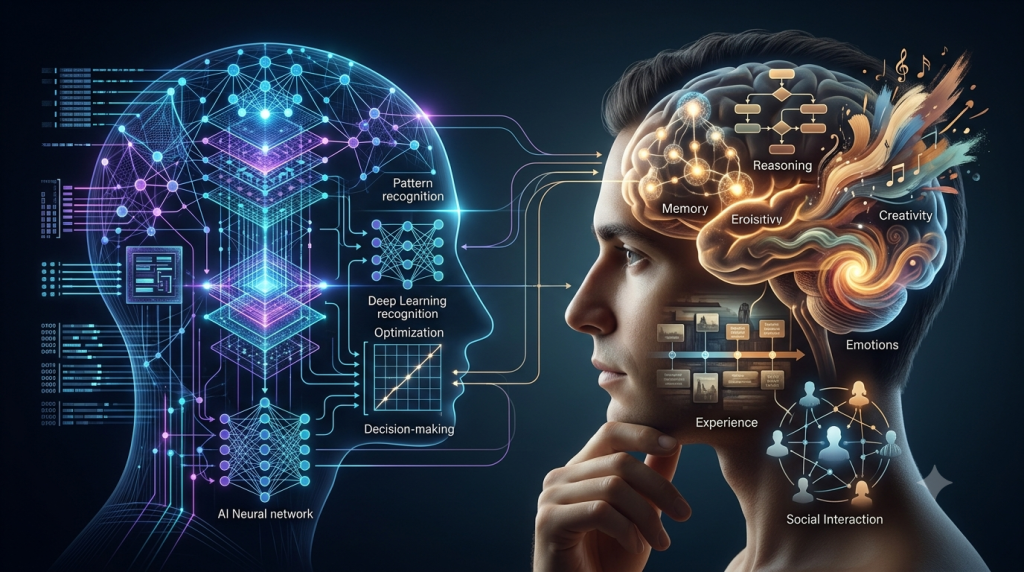
AI vs Human Intelligence Comparison
| Dimension | AI Systems | Human Intelligence |
|---|---|---|
| Information processing | Very high computational speed and scale | Limited by biological attention and processing capacity |
| Large-scale data analysis | Highly capable with suitable tools and data | Limited by time and available tools |
| Repetitive digital work | Highly suitable | Often inefficient |
| Pattern recognition | Very strong in many trained domains | Strong with contextual interpretation |
| Learning | Depends on training, system design, and feedback | Continuous biological and experiential learning |
| Adaptation | Strong in some structured environments | Broad adaptation across unfamiliar environments |
| Social understanding | Can model social and linguistic patterns | Grounded in relationships and lived experience |
| Emotional communication | Can generate emotionally appropriate language | Humans experience emotions and relationships |
| Physical interaction | Increasingly capable through robotics | Naturally embodied |
| Mathematical performance | Can exceed humans on some evaluations | Varies by individual and expertise |
| Reliability | Can produce confident errors | Humans also make errors |
| Scalability | Extremely high | Limited by human time and resources |
| Accountability | Depends on system design, governance, roles, and law | Humans and organizations may bear responsibility depending on context |
Important: This table is not a universal ranking. AI systems differ significantly from one another, and humans differ in knowledge, experience, expertise, and abilities.
The purpose of the comparison is to show that AI and human intelligence have different capability profiles.
Where AI Is Already Extremely Capable
Rather than asking whether AI is intelligent in the abstract, it is more useful to examine specific tasks.
Depending on the system, AI can be highly effective at:
- Large-scale information processing
- Pattern detection
- Text generation
- Text transformation
- Translation
- Document summarization
- Code generation
- Data classification
- Image and signal analysis
- Repetitive digital work
- Generating multiple candidate solutions
- Research assistance
- Information organization
- Customer-service assistance
- Business-process automation
Stanford’s 2026 AI Index documents major advances across language, vision, speech, reasoning, coding, AI agents, professional tasks, and robotics. At the same time, the report emphasizes that capability remains uneven and that evaluation results require context.
Why Can AI Be Brilliant at One Task and Weak at Another?
This is one of the most important ideas for understanding modern AI.
Suppose an AI system performs exceptionally well on a difficult mathematics benchmark.
The reasonable conclusion is:
The system demonstrated strong performance on that mathematical evaluation.
A much broader conclusion would be:
The system therefore possesses general human intelligence.
That second conclusion does not automatically follow.
Benchmarks measure particular capabilities under particular conditions.
Stanford’s 2026 AI Index also discusses benchmark saturation and reliability concerns, including invalid-question rates ranging from 2% on one reviewed evaluation to 42% on another. These figures do not make benchmarks useless; they show why benchmark results should be interpreted carefully and in context.
A benchmark is evidence about performance, not a complete measurement of intelligence.
What Does “Jagged Intelligence” Mean?
Jagged intelligence describes the uneven capability profile that can appear in AI systems.
An AI model may be exceptionally strong at one difficult task and unexpectedly weak at another.
For example, a system might perform highly on a formal mathematical evaluation while encountering difficulties with certain visual, physical, or contextual tasks.
Stanford HAI’s 2026 AI Index uses examples of this unevenness when discussing the current frontier of AI capabilities.
This is important because humans often assume:
If a machine can solve something very difficult, it should also be able to solve everything easier.
AI does not necessarily work that way.
Its capabilities can have an irregular shape.
AI Agents Show the Same Pattern

AI agents provide another useful example.
Agents are designed to perform multi-step tasks, often by interacting with software, tools, or digital environments.
Stanford’s 2026 AI Index reports that performance on the OSWorld benchmark for computer-use agents increased substantially, reaching about 66.3% in the reported evaluation. That is a major improvement, but it also means agents still failed a meaningful share of tasks under the benchmark conditions.
This illustrates an important principle:
Rapid improvement does not mean perfect reliability.
As AI becomes more capable, evaluating not only what systems can do but also how reliably they do it becomes increasingly important.
Can AI Replace Human Intelligence?
AI can automate or assist with many tasks that previously required human cognitive effort.
But replacing human intelligence as a whole is a much broader claim.
A more practical framework is to ask three questions:
- Can AI automate this task?
- Can AI augment a human doing this task?
- Where is human judgment still necessary?
This task-based approach is more useful than treating AI and humans as two competing workers with identical capabilities.
Automation vs Augmentation
| Model | Meaning |
|---|---|
| Automation | AI performs a task with limited human intervention |
| Augmentation | AI assists a human who remains involved |
| Collaboration | Humans and AI divide tasks according to their respective capabilities |
Research also provides evidence that AI can increase worker productivity.
A 2025 study by Erik Brynjolfsson, Danielle Li, and Lindsey Raymond analyzed 5,172 customer-support agents using an AI assistant. The researchers reported an average 15% increase in issues resolved per hour, with different effects across worker experience levels.
The study is important because it demonstrates augmentation in a real workplace setting, rather than proving that AI universally replaces workers.
The broader Stanford AI Index also reports productivity gains from AI assistance in several workplace studies, while noting that gains can vary by task and that deeper reasoning tasks may see smaller benefits.
Why Human Judgment Still Matters
AI can produce useful recommendations, but high-quality decisions require more than generated output.
For example:
Financial Work
AI may analyze financial information, calculate scenarios, or draft a report.
A human should verify:
- Figures
- Assumptions
- Sources
- Risk
- Context
- Applicable requirements
Medical Information
AI can help summarize or explain information.
But clinical decisions require qualified professionals and appropriate safeguards.
Legal Work
AI can assist with document analysis and information retrieval.
Legal conclusions require appropriate professional review.
Business Strategy
AI can generate scenarios and analyze large datasets.
Leaders still need to consider:
- Business objectives
- Customers
- Competition
- Resources
- Regulations
- Risk
- Organizational priorities
The central principle is simple:
AI can participate in a decision process without becoming the sole source of responsibility.
Human + AI: A More Practical Model
The future does not have to be described as:
Human vs AI
For many applications, a more useful model is:
Human + AI
AI can provide:
- Speed
- Scale
- Computation
- Drafting
- Pattern recognition
- Information processing
- Automation
- Multiple candidate solutions
Humans can provide:
- Goals
- Context
- Domain expertise
- Verification
- Judgment
- Accountability
- Ethical considerations
- Final decisions
This creates a complementary workflow.
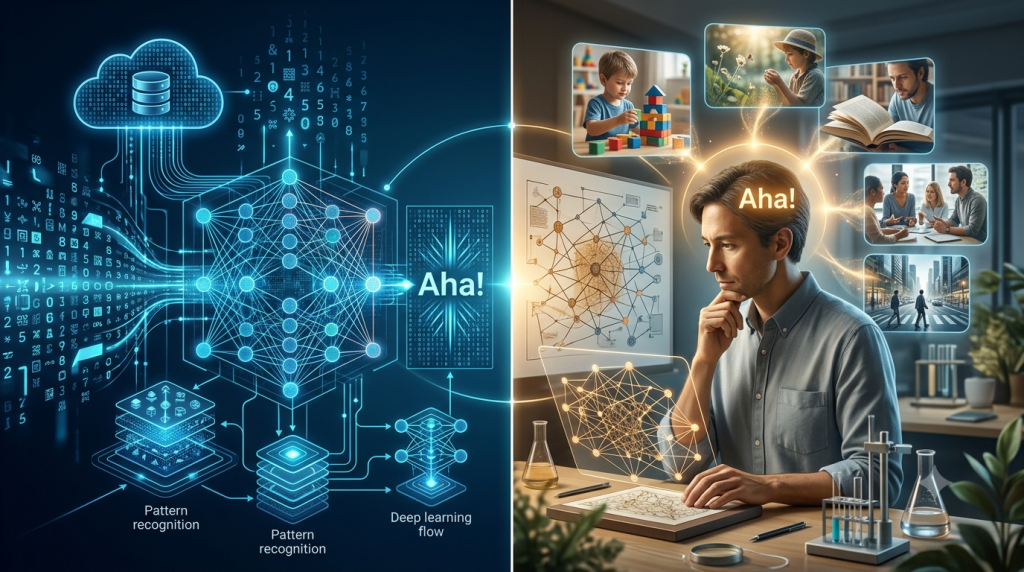
A Practical 5-Step Human + AI Workflow
Step 1: Let AI handle high-volume information work
Use AI to:
- Summarize
- Classify
- Organize
- Draft
- Compare
- Transform
- Generate initial ideas
Step 2: Let humans define the objective
Humans should establish:
- The goal
- Constraints
- Budget
- Priorities
- Risk tolerance
- Ethical requirements
- Success criteria
Step 3: Verify important outputs
Check:
- Facts
- Calculations
- Sources
- Dates
- Assumptions
- Legal requirements
- Financial figures
Step 4: Apply contextual judgment
Ask:
Does this output actually make sense in the real situation?
Step 5: Keep appropriate accountability
If an AI system participates in a consequential process, responsibility should remain clearly assigned to the appropriate human or organization.
Practical AI vs Human Decision Matrix
| Task | Possible AI Role | Human Role |
|---|---|---|
| Research | Search, summarize, organize | Verify sources and conclusions |
| Content creation | Generate drafts and ideas | Edit, fact-check, and add context |
| Customer support | Suggest responses and classify requests | Handle exceptions and sensitive cases |
| Data analysis | Process data and identify patterns | Interpret business context |
| Financial analysis | Calculate scenarios | Assess risk and make accountable decisions |
| Hiring | Assist with information processing | Apply appropriate human judgment |
| Business strategy | Generate scenarios | Set goals and make decisions |
| Software development | Generate and explain code | Review architecture, security, and correctness |
Can AI Think Like a Human?
This question requires careful wording.
AI systems can produce sophisticated outputs that resemble activities humans commonly associate with thinking, such as reasoning, planning, explanation, problem solving, and decision support.
However, demonstrating these behaviors does not establish that AI has a human mind.
There are several separate questions:
- Can AI solve problems? Yes, in many domains.
- Can AI produce reasoning-like explanations? Yes.
- Can AI plan multi-step tasks? Yes, depending on the system.
- Can AI adapt within some environments? Yes.
- Is AI cognition identical to human cognition? There is no basis for assuming that.
- Does benchmark performance prove human-like subjective experience? No.
Keeping these questions separate makes the discussion more scientifically useful.
Can AI Feel Emotions?
AI can generate language that appears empathetic.
For example, a conversational AI can respond to a user who is disappointed, confused, or worried using language that sounds emotionally appropriate.
But emotional expression and subjective emotional experience are different concepts.
An AI output that resembles empathy does not by itself demonstrate that the system experiences feelings.
Therefore, it is safer to distinguish:
simulated or generated emotional communication
from
human subjective emotional experience.
https://www.pwc.com/us/en/tech-effect/ai-analytics/ai-predictions.html
What Are AI’s Biggest Limitations in 2026?
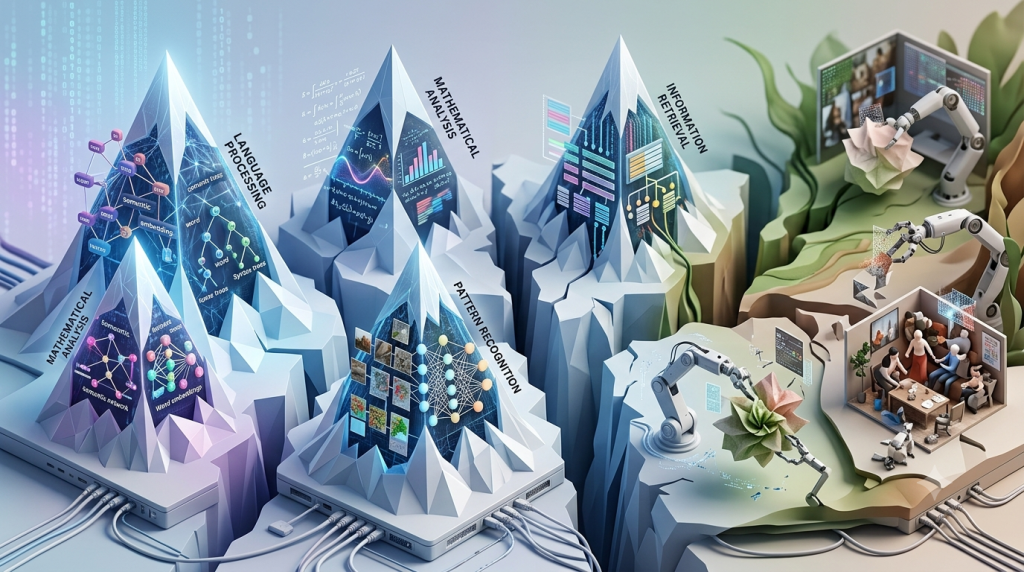
AI limitations vary by system, but several recurring issues deserve attention.
1. Confident errors
AI can generate false information in fluent language.
2. Uneven generalization
Strong performance in one environment does not guarantee strong performance in another.
3. Benchmark limitations
Benchmarks measure specific capabilities and can have reliability or contamination concerns.
4. Physical-world difficulty
Robotics remains considerably harder in uncontrolled real environments than in simulations or structured settings.
5. Context sensitivity
An AI system may misunderstand an instruction when important contextual information is missing.
6. Dependence on system design and data
Different models have different strengths, weaknesses, training processes, tools, and information access.
7. Governance and accountability
As AI becomes more capable, organizations must consider reliability, security, privacy, transparency, fairness, and responsibility.
NIST’s GenAI Risk Management Profile provides a framework for identifying and managing these types of risks.
What Can Humans Still Do That AI Struggles With?
There is no single permanent list because AI capabilities are changing quickly.
Nevertheless, humans currently retain important advantages in many contexts involving:
- Flexible physical interaction
- Social relationships
- Real-world contextual judgment
- Unfamiliar environments
- Continuous adaptation
- Personal experience
- Human accountability
- Understanding goals within lived social contexts
- Combining multiple forms of knowledge in unpredictable situations
These should not be interpreted as permanent boundaries.
AI capabilities continue to improve, so comparisons should be updated as evidence changes.
What Is AI Better At Than Humans?
Again, this depends on the task and system.
AI can have major advantages in:
- Computational speed
- Large-scale information processing
- Repetitive digital operations
- Rapid text transformation
- Searching large information spaces with appropriate tools
- Processing large datasets
- Generating many candidate outputs
- Pattern recognition in suitable domains
- Consistent execution of well-defined digital workflows
The important point is not that AI is universally superior.
It is that AI can provide capabilities that are difficult or expensive for an individual human to reproduce at scale.
Why the AI vs Human Debate Can Be Misleading
The phrase “AI vs human intelligence” sounds like there are two entities competing on a single scoreboard.
Real intelligence is more complicated.
Imagine comparing:
- A calculator
- A chess player
- A translator
- A mechanic
- A teacher
- A scientist
- A child
- A robot
- A language model
They all demonstrate different capabilities.
A calculator can outperform a person at arithmetic.
A person can outperform a calculator at deciding why the calculation matters.
Neither statement tells us everything about intelligence.
The same principle applies to AI.
The most useful comparison is capability-by-capability, not winner-by-winner.
The Future of AI and Human Intelligence
AI capability is developing rapidly.
Stanford’s 2026 AI Index documents continued progress in areas including reasoning, coding, agents, multimodal systems, professional tasks, robotics, and scientific applications. The same research also documents persistent weaknesses, uneven performance, benchmark challenges, and gaps between controlled environments and the real world.
This means the future is unlikely to be understood adequately through a simple question such as:
“Will AI become smarter than humans?”
A more useful set of questions is:
- Which tasks will become automated?
- Which jobs will be augmented?
- Which skills will become more valuable?
- How should AI systems be evaluated?
- Where should humans remain involved?
- How should organizations manage AI risk?
- How can people use AI without becoming overly dependent on it?
These questions are more directly connected to the real effects of AI on work, education, business, and society.
https://hai.stanford.edu/news/inside-the-ai-index-12-takeaways-from-the-2026-report
How Businesses Can Use AI Without Losing Human Oversight
Businesses can begin with a task-based approach.
Identify repetitive tasks
Look for activities involving:
- Data entry
- Summarization
- Classification
- Drafting
- Reporting
- Routine communication
Measure the baseline
Before introducing AI, record:
- Time required
- Error rate
- Cost
- Output volume
- Quality
Introduce AI assistance
Test AI on a limited workflow rather than changing everything at once.
Add verification
Create human review for outputs that could create financial, legal, safety, reputational, or customer-impacting consequences.
Measure the result
Compare:
Before AI → After AI
using meaningful metrics.
This approach helps organizations evaluate whether AI actually improves a process instead of assuming that automation automatically creates value.
Frequently Asked Questions
Is AI more intelligent than humans in 2026?
There is no single measurement that establishes AI as universally more intelligent than humans. AI can exceed human performance on specific benchmarks while its capabilities remain uneven across different tasks and real-world environments.
What is the main difference between AI intelligence and human intelligence?
AI intelligence refers to capabilities demonstrated by computational systems, such as pattern recognition, prediction, generation, information processing, and problem solving. Human intelligence is biological and develops through experience, perception, learning, social interaction, physical interaction, goals, and adaptation.
Can AI replace human intelligence?
AI can automate or assist with many individual tasks. Replacing human intelligence as a whole is a much broader claim that cannot be established simply by benchmark performance.
Why can AI be better at mathematics but worse at simple everyday tasks?
AI capabilities can be uneven. A system may perform exceptionally well on a formal mathematical evaluation while struggling with certain physical, visual, or contextual tasks that humans handle naturally.
What is jagged intelligence?
Jagged intelligence describes an uneven AI capability profile in which a system can be extremely strong in one area while showing unexpected weaknesses in another.
Is AI capable of genuine reasoning?
AI systems can produce reasoning-like outputs and perform strongly on many logical and mathematical evaluations. However, benchmark performance alone does not establish that AI reasons in exactly the same way humans do.
Can AI feel emotions?
AI can generate emotionally appropriate or empathetic-sounding responses. Such output is not, by itself, evidence of subjective emotional experience.
What is AI better at than humans?
AI can have major advantages in computational speed, large-scale information processing, repetitive digital work, pattern recognition in suitable domains, and rapid transformation of large quantities of information.
What are humans better at than AI?
Humans currently retain important advantages in many contexts involving flexible physical interaction, social relationships, unfamiliar environments, contextual judgment, lived experience, and human accountability.
Should businesses replace workers with AI?
The more useful question is which tasks AI can automate, which it can augment, and where human involvement remains valuable or necessary. Workplace research shows that AI assistance can increase productivity in some settings, but effects vary by task and worker.
What is the biggest limitation of AI today?
Important limitations include inaccurate outputs, uneven generalization, benchmark limitations, difficulty with unpredictable physical environments, and governance or accountability challenges.
Nuure Tech Analysis
The AI-versus-human debate is often presented as a competition.
A more useful interpretation is complementarity.
AI is particularly powerful when the problem involves large amounts of information, repetitive digital work, rapid computation, pattern processing, or generating many possible outputs.
Humans remain essential when the problem involves goals, context, relationships, physical environments, responsibility, and decisions with real-world consequences.
This does not mean AI capabilities will remain exactly where they are today.
They will continue to change.
Therefore, the strongest long-term skill may not be choosing between AI and human intelligence.
It may be learning how to combine human judgment with increasingly capable AI systems.
Final Takeaway
AI intelligence and human intelligence should not be treated as two identical forms of intelligence competing on one universal scale.
AI systems can already exceed human performance on specific tasks and evaluations. They can process information at enormous scale, generate content, write code, analyze patterns, assist workers, and increasingly operate tools and digital environments. Stanford’s 2026 AI Index provides extensive evidence of this rapid progress.
At the same time, AI performance remains uneven.
A system can be extraordinarily capable in one area and unexpectedly weak in another. Physical environments, contextual judgment, reliability, and responsible deployment remain important challenges.
Human intelligence is different.
It is biological and deeply connected to learning, experience, perception, adaptation, relationships, physical interaction, goals, and social context.
The most useful conclusion is therefore not:
“AI is better.”
or:
“Humans are better.”
Instead:
AI and humans have different capability profiles, and the practical opportunity is to combine their strengths responsibly.
For businesses, developers, students, researchers, creators, and everyday users, the important skill is increasingly knowing what to delegate to AI, what to verify, and where human judgment should remain central.
AI does not need to become identical to a human mind to transform what humans can accomplish.
Sources & Further Reading
- Stanford Institute for Human-Centered Artificial Intelligence (Stanford HAI). The 2026 AI Index Report — Technical Performance.
- Stanford Institute for Human-Centered Artificial Intelligence. 2026 AI Index Report.
- American Psychological Association. APA Dictionary of Psychology — Intelligence.
- National Institute of Standards and Technology (NIST). Artificial Intelligence Risk Management Framework: Generative Artificial Intelligence Profile (NIST AI 600-1).
- Brynjolfsson, E., Li, D., & Raymond, L. R. Generative AI at Work. The Quarterly Journal of Economics, 2025.
- Stanford HAI. 2026 AI Index — Economy / productivity findings.
Editorial Note
This article is intended for educational and informational purposes. AI capabilities change rapidly, and benchmark results represent performance under specific evaluation conditions. Readers should consider the date, methodology, system version, benchmark design, and real-world context when interpreting AI performance claims.
About Nuure Tech
Nuure Tech Editorial Team publishes practical, research-based content covering artificial intelligence, technology, software, digital business, and emerging technologies.
Our editorial approach prioritizes:
- Clear explanations
- Research-backed claims
- Primary and authoritative sources
- Factual accuracy
- Practical usefulness
- Transparent distinctions between evidence and interpretation
- Regular updating as technology changes
Editorial focus: Artificial Intelligence • Technology • Software • Digital Business • Emerging Technology
AI Intelligence Explained: The Ultimate Guide to How It Works in 2026
Download pdf